
Why Rebellion Saves Identity
 Curated by ss
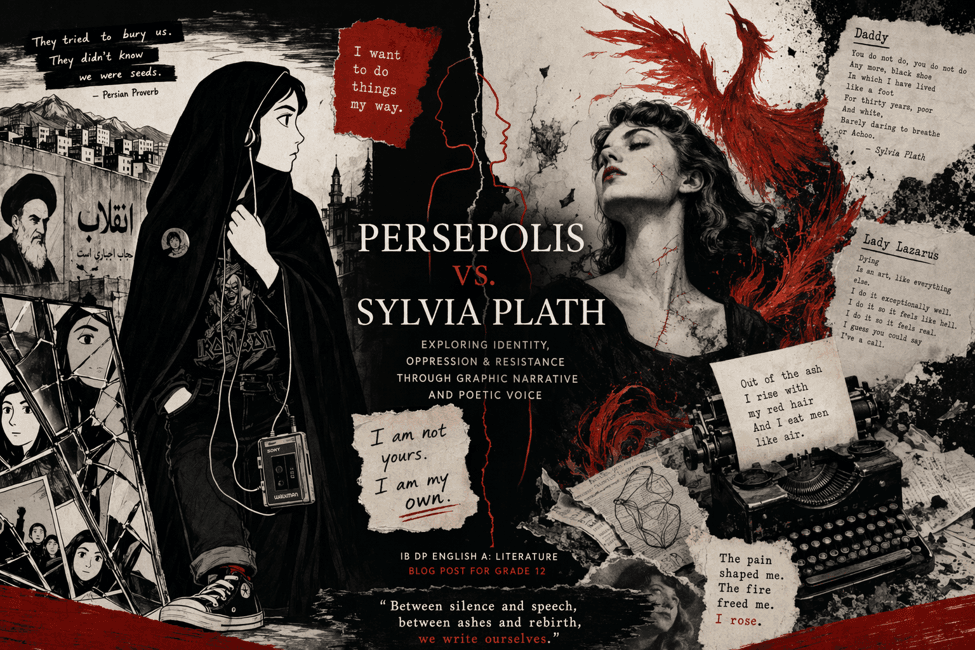
What happens when control becomes so intense that breaking the rules is the only way to stay yourself? In Persepolis and Sylvia Plath’s Daddy and Lady Lazarus, oppression does more than limit freedom—it slowly attacks identity, innocence, and the body itself.
- This comparison explores how Marji and Plath’s speakers respond to patriarchal control, fear, and social pressure.
- You’ll see how irony, symbolism, bodily imagery, and confessional poetry reveal rebellion as a form of survival.
- Most importantly, both texts show that risky choices are not just acts of defiance—they are proof of agency, selfhood, and the refusal to disappear.
For IB DP students, this argument is especially useful because it builds a clear comparative line: oppression may try to erase identity, but rebellion becomes the way these women prove they still exist.